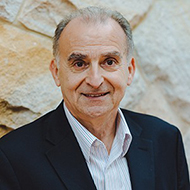
Luigi Colombo
Retired Texas Instruments Fellow
CNMC, LLC
Luigi Colombo is a retired TI Fellow with nearly five decades of experience in researching and developing advanced materials for electronic devices, including infrared detectors, high-performance transistors, DRAM capacitors, and ferroelectric memories. He pioneered the first CVD graphene process, now widely adopted by the 2D materials research community.
Dr. Colombo holds a BS in Physics and a PhD in Materials Science. During his tenure at Texas Instruments, in addition to performing R&D of new materials he also managed external research collaborations and played an influential role on several advisory boards, including the European Graphene Flagship Strategic Advisory Council, UC Berkeley's Center for Energy Efficient Electronics Science, SRC-NRI Technical Program Group, SRC-STARnet Strategic Advisory Board, and FLEET: the Australian Research Council Centre of Excellence in Future Low-Energy Electronics Technologies.
He is recognized as a Fellow of the IEEE and the American Physical Society (APS). Currently, he serves as a consultant specializing in 2D materials and novel materials for innovative back-end-of-line device architectures.
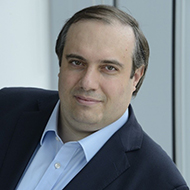
Andrea Ferrari
Cambridge Graphene Centre / University of Cambridge
Andrea Ferrari is Professor of Nanotechnology at the University of Cambridge. His work is at the frontier between engineering, physics and materials science. He has a track record of leading and participating in public and private initiatives in deep tech in Europe and building connections across government, industry, research organizations, and investment communities, accelerating the translation of research into commercial impact.
He is director of the Cambridge Graphene Centre, of the Layered Materials Research Foundry and Co-Chair of the Quantum and Advanced Materials for a Sustainable Society Strategic Research Initiative of the University of Cambridge, as well as co-Chair of the Manchester-Cambridge Centre for Doctoral Training in 2D materials of tomorrow.

Kari Hjelt
Innovation Director at Graphene Flagship
Executive Board Member, Graphene Flagship
Director at Chalmers Industriteknik
Kari Hjelt is a recognized leader in technological innovation and the commercialization of advanced materials. He holds a PhD in Engineering Physics from Helsinki University of Technology and an Executive MBA from London Business School. Hjelt has held key roles at the intersection of research, industry, and entrepreneurship.
As Innovation Director of the Graphene Flagship — one of Europe's largest scientific initiatives — he leads innovation processes and commercialization strategies for graphene and other 2D materials technologies.
(graphene-flagship.eu)
He previously founded and led several startups, and held senior positions at Nokia Ventures Organization and Nokia Research Centre, gaining extensive experience in corporate research and venture activities.
His expertise spans innovation management, business development, and value creation from emerging technologies — making him an ideal strategic advisor for deep-tech ventures like Apeiron.
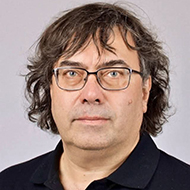
Nicola Marzari
Cavendish Professor of Physics, University of Cambridge (UK); Fellow of Trinity College
Chair of Theory and Simulation of Materials at EPFL (Switzerland)
Director of NCCR MARVEL – Swiss National Centre for Computational Design and Discovery of Novel Materials
Head of the Laboratory for Materials Simulations (PSI, Switzerland)
Excellence Chair, University of Bremen (Germany)
Prof. Nicola Marzari is a leading figure in quantum simulations of materials. He is the Cavendish Professor of Physics at the University of Cambridge and a Fellow of Trinity College, based in the TCM Group at the Cavendish Laboratory. His election took effect on 1 September 2025, with a transition to full-time in September 2026.
He also holds the Chair of Theory and Simulation of Materials at EPFL, where he directs NCCR MARVEL, and he heads the Laboratory for Materials Simulations at the Paul Scherrer Institut (PSI). In parallel, he holds an Excellence Chair at the University of Bremen.
Previously, he was the Toyota Chair of Materials Engineering at MIT and the inaugural Statutory Chair of Materials Modelling at the University of Oxford, where he also led the Materials Modelling Laboratory.
His research focuses on the development and application of novel electronic-structure theories, algorithms, and open-source software to understand, predict, and ultimately design the properties of complex materials—with applications spanning energy, electronics, and quantum technologies.

Sir Konstantin Novoselov
Nobel Laureate in Physics (2010)
Professor at the National University of Singapore
Langworthy Professor of Physics at the University of Manchester
Sir Konstantin 'Kostya' Novoselov is a Russian-British physicist renowned for his groundbreaking work in condensed matter physics, mesoscopic physics, and nanotechnology. Born in 1974 in Nizhny Tagil, Russia, he earned his MSc from the Moscow Institute of Physics and Technology and completed his PhD at Radboud University Nijmegen in the Netherlands. In 2004, alongside Andre Geim, he successfully isolated graphene at the University of Manchester, a discovery that earned them the Nobel Prize in Physics in 2010.
Currently, Professor Novoselov holds positions at both the National University of Singapore and the University of Manchester. He has published over 250 peer-reviewed research papers and has been honored with numerous awards, including the Nicholas Kurti Prize, the Europhysics Prize, the Leverhulme Medal, and the Onsager Medal. In recognition of his services to science, he was knighted in the 2012 New Year Honours.